
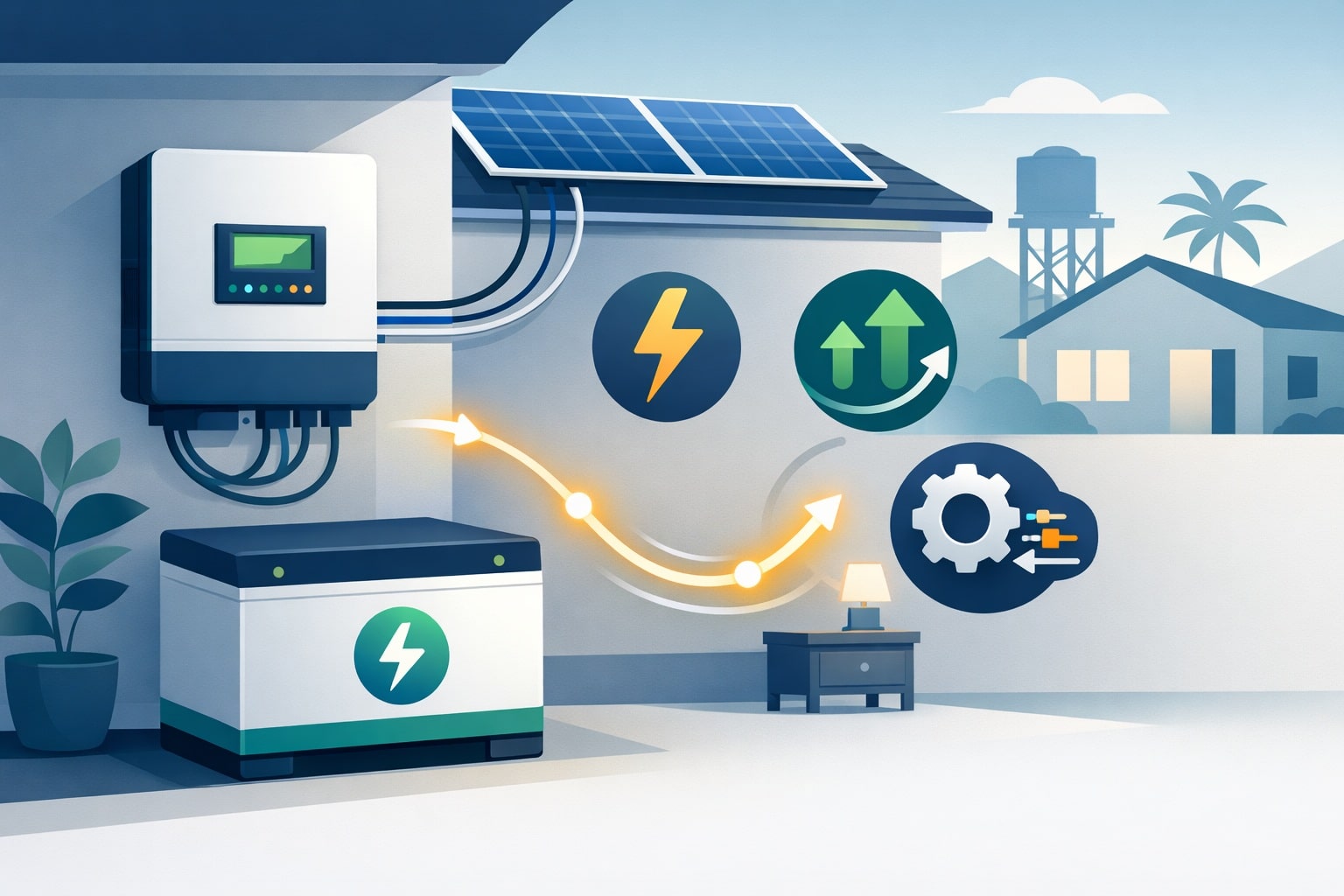
SOLAR INVERTER HACKS FOR NIGERIA: 7 EXPERT TIPS TO EXTEND YOUR BATTERY LIFE
The fastest solar inverter hacks in Nigeria are: keep panels dust-free (gains up to 30% output), never discharge GEL/AGM batteries below 50%, shift heavy appliances to daytime solar hours, and protect terminals with petroleum jelly. For best results, use a quality hybrid inverter with a built-in MPPT charge controller so your panels can deliver more usable power. Below, we break down each hack with step-by-step instructions.
WHY SOLAR INVERTER HACKS MATTER IN NIGERIA RIGHT NOW
Electricity tariffs are climbing. Fuel prices remain volatile and painfully high in Nigeria, with petrol selling above ₦1,200 per litre at many Lagos filling stations as of mid-March 2026. Running a generator has become a luxury most households cannot sustain.
Here is the thing: most “failed” batteries are not actually dead. They were simply poorly managed. At Mercury Direct, we have inspected and installed systems across Lagos, Ibadan, and Abuja for over a decade. The same mistakes keep showing up. These seven solar inverter hacks will help you fix those mistakes, extend your battery lifespan, and get more power from every ray of sunlight.
HACK 1: THE DUST-TO-POWER PANEL CLEAN (EVERY 2 WEEKS)
In Nigeria, especially during the Harmattan season, a thin layer of dust can reduce your solar panel efficiency by up to 30%. That is nearly a third of your energy harvest gone, just because of dust.
Do not wait for rain. Use a soft cloth and plain water to wipe your panels every two weeks. Do this early in the morning or late in the evening. Cleaning hot glass with cold water in the afternoon can cause micro-cracks that permanently damage the panel.
HACK 2: THE 50% DEPTH OF DISCHARGE RULE
If you are using Mercury Deep Cycle GEL or AGM batteries, regularly discharging them to 0% can shorten their lifespan dramatically. This is the single most common battery killer in Nigeria.
Set your inverter’s “Low Battery Cut-off” voltage higher. For a 12V battery, set the cut-off at 11.5V to 11.8V. For a 24V bank, set it at 23V to 23.6V. The goal is to never let your battery drop below 50% capacity. Following this one hack can significantly extend your battery’s useful life, potentially saving you hundreds of thousands of naira in early replacement costs.
If you want even deeper discharge capability, consider upgrading to LiFePO4 (lithium iron phosphate) batteries. These can safely discharge to 80% to 95% DoD without damage. Check out the Mercury 5kVA + 10kWh Lithium system for a long-life setup.
HACK 3: TERMINAL PROTECTION WITH PETROLEUM JELLY
Nigeria’s humidity causes rapid corrosion on battery terminals. You will see a white or blue crust forming. This creates resistance, making your inverter work harder and charge slower. Left unchecked, it can cause overheating and permanent damage to your battery connections.
Clean your terminals with warm water and a baking soda paste (one tablespoon of baking soda to one cup of water). Scrub gently with an old toothbrush. Once clean and dry, apply a thin layer of petroleum jelly (Vaseline) over each terminal. This creates an airtight seal that prevents oxidation and ensures a clean flow of current.
HACK 4: SHADOW AUDITING FOR MAXIMUM SOLAR OUTPUT
If a shadow covers even 10% of a single solar panel, it can drop the output of the entire string by 50% or more. This is because panels connected in series are only as strong as the weakest cell. One shaded cell drags down everything.
Stand on your roof at 10 AM, 1 PM, and 4 PM. If a tree branch, a water tank, or a neighbour’s building casts even a small shadow on your panels, you need to address it. Trim the branch, relocate the panel, or discuss the issue with your solar installer. Total sunlight is non-negotiable for Nigerian solar efficiency.
HACK 5: SMART LOAD SHEDDING (THE DAYTIME HACK)
Most Nigerians run their heavy appliances (washing machines, pumping machines, pressing irons) at night. This is an energy sin, because you are pulling all that power from your batteries when they should be resting for essential nighttime loads like lights, fans, and your fridge.
Shift your heavy lifting to between 10 AM and 2 PM. When the sun is at its peak, power comes directly from the panels, bypassing the batteries entirely. Your pumping machine, washing machine, and iron all run on free solar energy. Your batteries stay full and rested for the night. This single habit change can add years to your battery life. For more on which appliances to prioritise, see our guides on what a 3.5kVA inverter can power and whether an inverter can carry a fridge.
HACK 6: VENTILATION IS A PERFORMANCE HACK
Inverters and batteries hate the Nigerian heat. An overheating inverter will “derate,” meaning it reduces its output to protect its internal components. You might have a 3.5kVA inverter rated for 2,800W continuous, but in a hot, enclosed cupboard it could derate to 2,000W or less.
Never keep your inverter in a closed cupboard or a room with no ventilation. Ensure there is at least 15cm (6 inches) of clearance on all sides. If your inverter room gets very hot, install a small DC exhaust fan. This simple addition can improve system efficiency by up to 15% and prevent the continuous beeping that comes with thermal overload alarms.
HACK 7: CHOOSE THE RIGHT INVERTER TECHNOLOGY
If you have not bought a system yet, the ultimate solar inverter hack for Nigeria is choosing a Solar Hybrid Inverter with a built-in MPPT charge controller. MPPT (Maximum Power Point Tracking) constantly adjusts to “track” the sun and extract maximum energy from your panels, even on cloudy Lagos afternoons.
A standard PWM controller wastes a significant portion of available solar energy. An MPPT controller can often recover considerably more usable power, especially in larger systems or when panel voltage is well above battery voltage. Over a year, the difference adds up to hundreds of kilowatt-hours of free electricity. The Mercury 3.5kVA Solar Hybrid and the Mercury 5.5kVA Solar Hybrid both come with built-in MPPT controllers. For a comprehensive comparison of inverter types, read our pure sine wave vs. modified sine wave guide.
YOUR SOLAR MAINTENANCE CHECKLIST
Here is a quick reference table to keep your system running at peak performance all year round.
| Action | Frequency | Benefit |
|---|---|---|
| Wipe solar panels | Every 2 weeks | Up to 30% more energy harvest |
| Check battery terminals | Monthly | Prevents power loss and corrosion |
| Monitor load and DoD | Daily | Extends battery life by 2x or more |
| Check manufacturer charging settings | Monthly | Prevents overcharge and extends battery life |
| Shadow audit | Quarterly | Ensures full panel output |
| Check ventilation | Monthly | Prevents derating and overheating |
RECOMMENDED MERCURY SOLAR SYSTEMS FOR NIGERIAN HOMES
Applying these solar inverter hacks gives the best results when paired with quality equipment. Here are the Mercury systems we recommend based on household size.
| Household Size | Recommended System | Continuous Output | Best For |
|---|---|---|---|
| Small (1 to 2 bedroom) | Mercury 1.5kVA Hybrid | 1,200W | Lights, fans, TV, phone charging |
| Medium (3 bedroom) | Mercury 3.5kVA Hybrid | 2,800W | Fridge, lights, fans, TV, small AC |
| Large (4+ bedroom / office) | Mercury 5.5kVA Complete System | 4,400W | Multiple ACs, fridge, full home |
| Premium (long runtime) | Mercury 5kVA + 10kWh Lithium | 4,000W | All-day power, zero maintenance batteries |
Not sure which size you need? Use our battery runtime calculator or read the 2025 Inverter Buying Guide for a step-by-step walkthrough.
SOLAR INVERTER HACKS FOR NIGERIA FAQ
How often should I clean my solar panels in Nigeria?
Clean your solar panels every two weeks with a soft cloth and plain water. During Harmattan, when dust is heaviest, you may need to clean weekly. Always clean in the morning or evening to avoid thermal shock from cold water on hot glass.
What is the best depth of discharge for inverter batteries in Nigeria?
For GEL and AGM deep cycle batteries, never discharge below 50% capacity (50% DoD). This can significantly extend battery lifespan compared to deep cycling. LiFePO4 lithium batteries can safely handle 80% to 95% DoD. Read our battery comparison guide for more details.
Can petroleum jelly really help my battery terminals?
Yes. Petroleum jelly creates an airtight barrier that prevents the humidity-driven oxidation that causes white and blue corrosion on battery terminals. Clean terminals first with a baking soda paste, then apply a thin layer of Vaseline. This ensures low-resistance connections and faster charging.
What is the difference between MPPT and PWM charge controllers?
MPPT (Maximum Power Point Tracking) controllers constantly adjust voltage and current to extract the maximum energy from your panels. They can recover significantly more usable power than PWM controllers, especially in larger systems or when panel voltage is well above battery voltage. All Mercury Solar Hybrid Inverters include built-in MPPT controllers.
Why does my inverter produce less power when it is hot?
Inverters derate (reduce output) to protect their internal electronics from heat damage. A 3.5kVA inverter rated for 2,800W can drop to 2,000W or less in an enclosed, hot space. Ensure at least 15cm clearance on all sides and consider adding an exhaust fan. See our inverter installation guide for proper placement.
When is the best time to run heavy appliances on solar in Nigeria?
Run washing machines, pumping machines, and pressing irons between 10 AM and 2 PM when solar output is at its peak. This way the power comes directly from your panels, keeping your batteries fully charged for nighttime use. Check what a 5.5kVA inverter can power to plan your daytime loads.
STOP WASTING POWER. START USING THESE SOLAR INVERTER HACKS TODAY.
These hacks work best with quality equipment. Explore our range of Mercury Solar Hybrid Inverters with built-in MPPT controllers and long-life deep cycle batteries. Call us on 0703 745 1701 or chat with an expert on WhatsApp for a free consultation.
View Mercury Solar Inverters →