
How Many Solar Panels for 3.5kVA Inverter?
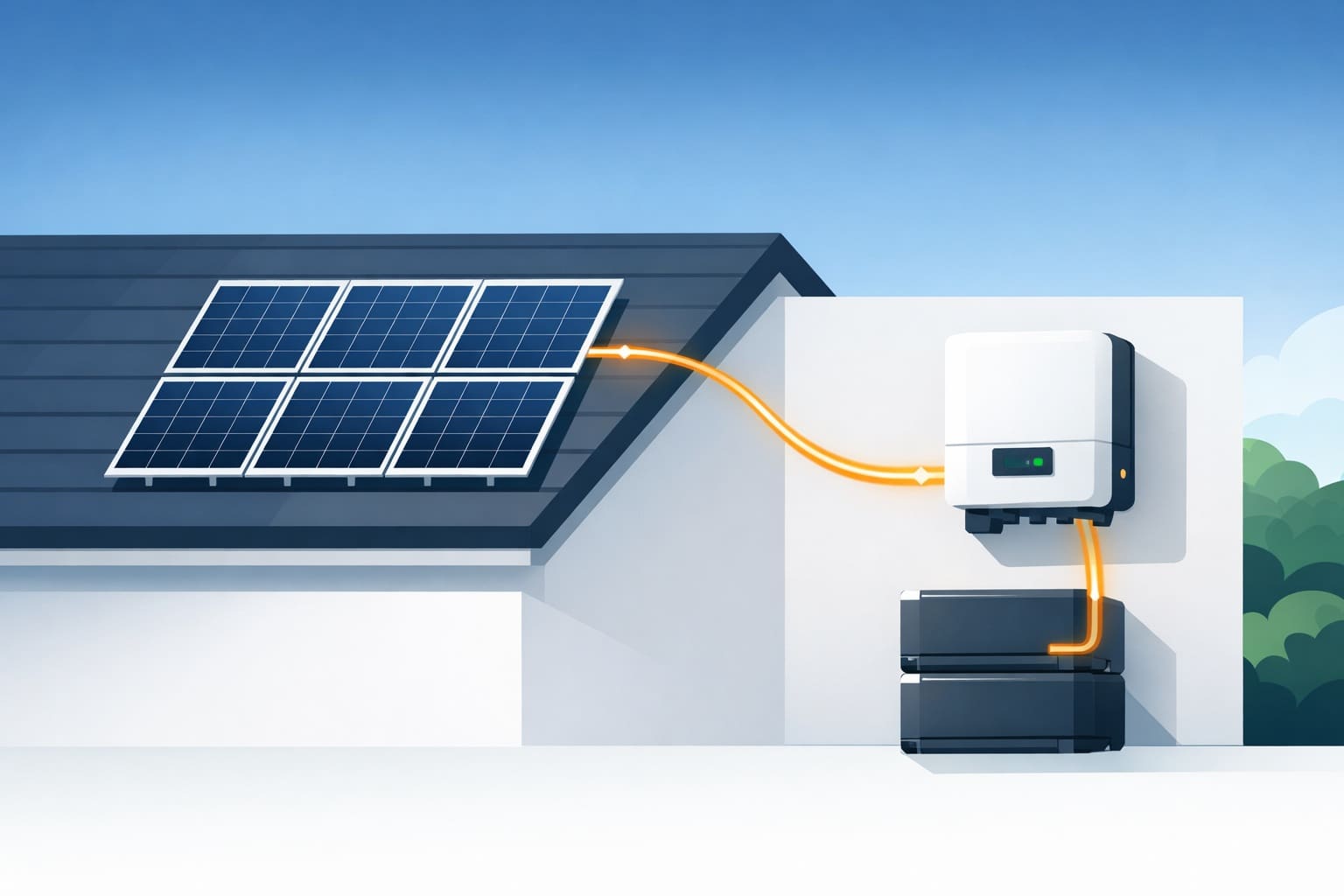
For the Mercury 3.5kVA Hybrid MPPT Inverter, here is the ladder for how many solar panels for a 3.5kVA inverter:
- Minimum: 4 panels (300W to 420W)
- Recommended for most Nigerian homes: 4 to 8 panels
- High-demand or lithium-battery setups: up to 10 panels, with final design based on wattage and wiring
- Absolute ceiling: total array must stay below the inverter’s 5,000W PV input limit, and string voltage must remain within 120Vdc to 450Vdc
Here is the reality on ground in April 2026: petrol pricing has been volatile week-to-week in Lagos, and NEPA supply is as unreliable as ever. Running a generator every evening is now an expense that can swallow your entire monthly budget. Solar is no longer a luxury for Nigerian homeowners, oga. It is economic survival.
The 3.5kVA capacity is one of the most popular choices for medium-sized Nigerian households, but the most common question we get at Mercury Direct is simple: how many solar panels do I actually need? In this guide we break down the exact calculations, explain what the Mercury 3.5kVA Solar Hybrid Inverter can accept, and give you real-world runtime figures and indicative pricing to help you make the right call.
The Decision Table: Matching Panel Count to Your Situation
Before the full calculation, here is the practical decision table for the Mercury 3.5kVA platform. Find your situation and work from there:
| Panel Count | Total Array | Best For | Key Limitation |
|---|---|---|---|
| 4 x 300W | 1,200W | Light daytime loads; family away during the day; basic evening backup | Slow battery recharge; not sufficient for heavy daytime use |
| 4 x 420W | 1,680W | Medium household; faster recharge without adding more panels | Still limited under heavy cloud cover or Harmattan dust |
| 6 x 420W | 2,520W | Frequent multi-day blackouts; moderate daytime loads; stronger recharge buffer | Higher upfront cost; needs adequate roof space |
| 8 x 420W | 3,360W | Heavy daytime users; home offices; significant reduction in grid reliance | Careful series/parallel wiring required to stay within voltage limits |
| 10 x 450W | 4,500W | Near-maximum generation; lithium battery owners; near-complete grid independence | Approaching the 5,000W PV input ceiling; wiring must be confirmed with Mercury Direct |
All configurations assume the Mercury 3.5kVA Hybrid MPPT Inverter. Maximum rated PV input: 5,000W. Do not exceed this limit regardless of panel count.
Understanding the 3.5kVA Inverter Capacity
The Mercury 3.5kVA Solar Hybrid MPPT Inverter is a 24-volt system, requiring a minimum of two 12V batteries connected in series. It delivers a pure sine wave output, providing clean, stable power that is safe for sensitive electronics, motor-driven appliances, and modern compressor-based refrigerators. See our guide on pure sine wave vs modified sine wave inverters for why this matters.
With the right battery bank and solar array, this system can comfortably run:
- Lighting and fans: Multiple LED lights and ceiling fans simultaneously
- Entertainment: 1 to 2 LED or Smart televisions with DSTV decoders
- Devices: Laptops, mobile chargers, Wi-Fi routers
- Refrigeration: A modern energy-efficient inverter refrigerator
- Water: A small water pump on intermittent use
For a full breakdown of what this platform handles, read our dedicated guide: what can a 3.5kVA inverter power?
Step-by-Step Calculation: How Many Solar Panels Do You Need?
The number of panels depends on two things: your total load (what appliances you are running) and how aggressively you want to charge your batteries. Here is the full calculation using a typical Lagos household as an example.
Step 1: Calculate Your Total Load
List every appliance you want to run and add their wattages. Here is a representative medium-household scenario:
| Appliance | Quantity | Watts Each | Total Watts |
|---|---|---|---|
| 43-inch LED TV | 1 | 80W | 80W |
| DSTV Decoder | 1 | 45W | 45W |
| Ceiling Fans | 2 | 75W | 150W |
| Energy-Efficient Bulbs (9W each) | 10 | 9W | 90W |
| Inverter Refrigerator | 1 | 245W | 245W |
| Total Simultaneous Load | 610W |
Step 2: Calculate Daily Watt-Hours Required
Decide how many hours per day you want to run purely on solar. For a 5-hour daytime window with a 30% safety margin for wiring losses and weather variation:
Add 30% margin: 3,050Wh x 1.30 = 3,965Wh
Step 3: Divide by Peak Sun Hours
In Lagos and most of southern Nigeria, usable peak sunlight averages approximately 4 hours per day. During Harmattan, dust on panels reduces this further. The safety margin above provides some buffer.
Step 4: Divide by Panel Wattage
For a 610W household load running 5 hours daily in Lagos, four 300W monocrystalline panels is the practical minimum. To learn more about panel types, read our guide on monocrystalline vs polycrystalline solar panels.
Battery Runtime: How Long Will Your System Last at Night?
Solar panels power your home during the day. Batteries carry you through the night and during NEPA blackouts. The standard Mercury 3.5kVA system ships with two 200Ah deep-cycle batteries wired in series to form a 24V bank. Here are two runtime estimates at different Depth of Discharge assumptions:
= (24V x 200Ah x 0.50 x 0.85) / 610W = 2,040Wh / 610W = 3.3 hours
Real-world Nigerian estimate (80% DoD, typical where NEPA supply is very irregular):
= (24V x 200Ah x 0.80 x 0.85) / 610W = 3,264Wh / 610W = 5.35 hours
Want to run your own numbers? Use our inverter battery runtime calculator.
Three Solar Panel Configurations for the Mercury 3.5kVA
The Mercury 3.5kVA Hybrid Inverter features a built-in 100A MPPT solar charge controller with a PV input voltage range of 120Vdc to 450Vdc and a maximum PV array limit of 5,000W. MPPT technology extracts maximum power from your panels even on cloudy days. Do not exceed 5,000W regardless of panel count, and do not let your string voltage drop below 120Vdc or climb above 450Vdc.
| Package | Configuration | Total Array | Indicative Price | Best For |
|---|---|---|---|---|
| Standard | Inverter + 2x200Ah GEL + 4x300W | 1,200W | From ₦2,480,000 | Families away during the day; basic evening backup |
| Upgraded | Inverter + 2x200Ah GEL + 4x420W | 1,680W | Call to confirm | Faster recharge without doubling the panel count |
| Premium Lithium | Inverter + 5kWh LiFePO4 + 8x450W | 3,600W | From ₦3,400,000 | Heavy daytime users; home offices; near-complete grid independence |
Indicative pricing only. Prices move with exchange rate and supplier updates. Confirm today’s quote before ordering by calling 07037451701.
Generator vs Solar: What Are You Actually Paying?
Petrol pricing in Nigeria has been highly volatile in 2026, with reported Dangote ex-gantry levels moving in the ₦1,200 to ₦1,275 range within a single week, and Lagos pump prices typically ₦50 to ₦150 per litre higher than the gantry. The commercial logic below holds across a wide fuel-price range, but the exact monthly spend you will see depends on the week:
| Cost Factor | Petrol Generator (2.5kVA) | Mercury 3.5kVA Solar System |
|---|---|---|
| Fuel cost per litre | Roughly ₦1,200 to ₦1,400 (Lagos, April 2026, volatile) | No fuel required during operation |
| Consumption | Approx. 1.0 to 1.5 litres/hr (varies by model, age, and load) | No fuel consumption |
| Daily cost (1.2L/hr, 8 hours, ₦1,300 midpoint) | ₦12,480 | No daily fuel cost |
| Monthly fuel spend (heavy-use scenario) | ₦300,000 to ₦380,000 | No fuel cost (battery replacement and occasional maintenance costs still apply over time) |
| Quarterly maintenance | ₦15,000+ (oil, filters, spark plugs) | Minimal (panel cleaning, annual check) |
| Noise and fumes | Daily noise and fumes | Silent and emission-free |
| Upfront investment | ₦350,000 to ₦600,000 | From ₦2,480,000 (complete system) |
| Payback period | Ongoing costs, no payback | Roughly 7 to 16 months on fuel savings (depends on monthly generator spend and fuel price) |
As of April 2026, depending on the week and source, petrol pricing has remained highly volatile. Calculations use a ₦1,300/litre midpoint; adjust upward or downward with the week’s pump price.
For heavy generator users, monthly fuel spend of ₦300,000 to ₦380,000 is common at current prices. Against a complete Mercury 3.5kVA solar system starting from ₦2,480,000, that puts fuel-savings payback somewhere between 7 and 10 months. Lighter users who spend ₦150,000 to ₦250,000 per month on fuel will see payback in the 10 to 16 month range. Either way, once you cross the payback line, the savings run pure, before you even factor in maintenance, generator theft risk, and the value of silent, uninterrupted power.
Factors That Affect Your Solar Setup in Nigeria
- Harmattan season: Thick dust coats panels between November and February, cutting output by 10% to 20%. If you live in Abuja, Kaduna, or anywhere in the North, add at least one extra panel and clean your panels monthly.
- Rainy season cloud cover: Lagos experiences heavy cloud cover from May through October. Peak sun hours can drop from 4 hours to 2.5 to 3 hours on overcast days, reducing your daily harvest significantly.
- NEPA blackout duration: If your neighbourhood experiences total blackouts for multiple days, size your array so the sun handles 100% of charging. This means 6 to 8 panels minimum.
- Battery bank size: The more battery capacity you install, the more panels you need to charge it effectively. If you upgrade to a 5kWh lithium battery, a 4-panel array will charge it too slowly. Aim for at least 6 to 8 panels in that scenario.
- Roof orientation: South-facing roofs in Nigeria capture the most sunlight. East-west orientations reduce yield by 15% to 25%, so add extra panels to compensate. Read our guide on how to connect solar panels correctly.
Real-World Scenario: A Typical Ikeja Household
The following scenario is a composite based on multiple Mercury Direct customer installations in Ikeja and surrounding areas. It reflects a typical experience rather than a single named household.
Before switching to solar, this household spent approximately ₦60,000 every week fuelling their petrol generator due to constant grid failures in their area. That was ₦240,000 per month, every month, with no indication NEPA supply would improve.
They opted for the Mercury 3.5kVA Hybrid Solar Inverter MPPT 24V Complete System starting from ₦2,480,000, including the inverter, two 200Ah deep-cycle batteries, and four 300W solar panels.
By shifting heavy appliance use (water pumping, ironing) to peak sunlight hours between 10:00 AM and 3:00 PM, four panels easily carried the daytime load. The MPPT charge controller prioritised solar energy intelligently, fully charging the batteries by early afternoon. At night, the batteries provided silent, uninterrupted power for fans, TVs, and security lights until morning.
At ₦240,000 per month in prior generator spend, the system reached its fuel-savings payback point in approximately 10 months. When petrol prices spiked again in early 2026, the household did not feel it.
Why Choose Mercury Direct for Your Solar Installation?
- Authorised Mercury retailer: Mercury Direct is an authorised dealer selling genuine, warranty-backed Mercury products, not grey-market or refurbished units.
- Warranty: 1-year comprehensive warranty on all Mercury Inverters. 5-year warranty on Lithium Battery systems purchased through Mercury Direct.
- Lifetime technical support: Backed by a nationwide service network. Read our inverter FAQ or call us directly at 07037451701.
- Fast delivery: Same-day delivery within Lagos at ₦5,000. Nationwide delivery within 48 hours at ₦8,000.
- Free system sizing: Our technical team will calculate your exact requirements at no charge. Call or WhatsApp 07037451701.
For comparison of larger systems, see our guides on the Mercury 5.5kVA Solar Hybrid System and what a 5.5kVA inverter can power. For smaller needs, consider the Mercury 1.5kVA Hybrid or Mercury 2.4kVA Complete System. Also see our inverter buying guide and which battery is best guide before deciding.
How Many Solar Panels for 3.5kVA Inverter FAQ
Can I use a 3.5kVA inverter without solar panels?
Yes. You can run it as a standard inverter that charges from grid power (NEPA) or a generator. The Mercury 3.5kVA Pure Sine Wave System with 2x200Ah batteries and no solar is a popular starter setup, and you can add solar panels later because the 3.5kVA Hybrid model has the MPPT charge controller built in and ready to accept panels whenever your budget allows.
Will a 3.5kVA inverter carry a refrigerator?
Yes, but use a modern energy-efficient inverter refrigerator. Traditional deep freezers have massive starting motor surges that can overload the inverter and drain batteries rapidly. A modern inverter fridge draws around 150W to 245W while running and is ideal for this system. For more detail, read our guide on whether an inverter can carry a fridge.
Is it better to have more batteries or more solar panels?
They serve different purposes. More solar panels generate more power during the day and reduce grid dependence. More batteries store more energy for nighttime use and extended blackouts. The critical rule: your solar array must be large enough to fully charge your battery bank each day. If you add more batteries without adding panels, your batteries will never reach a full charge, significantly shortening their lifespan.
How many hours will the system last on battery for a 610W load?
Using the standard 2x200Ah GEL/AGM battery bank (24V series): conservative estimate at 50% DoD gives (24V x 200Ah x 0.50 x 0.85) / 610W = 3.3 hours. Real-world Nigerian estimate at 80% DoD gives (24V x 200Ah x 0.80 x 0.85) / 610W = 5.35 hours. Use our battery runtime calculator for your exact figures.
What is the maximum number of solar panels the Mercury 3.5kVA can accept?
The Mercury 3.5kVA Hybrid MPPT Inverter supports a maximum PV array of 5,000W with a PV input voltage range of 120Vdc to 450Vdc. Panel count alone is not the decision, however. Your final series/parallel wiring must keep both total wattage and string voltage within the inverter’s accepted PV range. Call Mercury Direct at 07037451701 to confirm your wiring configuration before installation.
How much does a complete 3.5kVA solar system cost in Nigeria?
Mercury Direct offers multiple tiers: the standard complete system with 2x200Ah GEL batteries and 4x300W panels starts from around ₦2,480,000, and a premium lithium package with 5kWh LiFePO4 battery and 8x450W panels starts from around ₦3,400,000. Prices move with exchange rate and supplier updates, so confirm today’s quote before ordering.
Stop Calculating. Start Saving.
Tell us your appliances and location, and we will size the system, quote today’s exact price, and confirm the correct series/parallel wiring, same day. Visit us at 24, Ladipo Oluwole Street, Off Adeniyi Jones, Ikeja, Lagos, call 07037451701, or reach us directly on WhatsApp.
WhatsApp Us for a Free Quote → Call 07037451701