
INVERTER FOR RESTAURANT NIGERIA
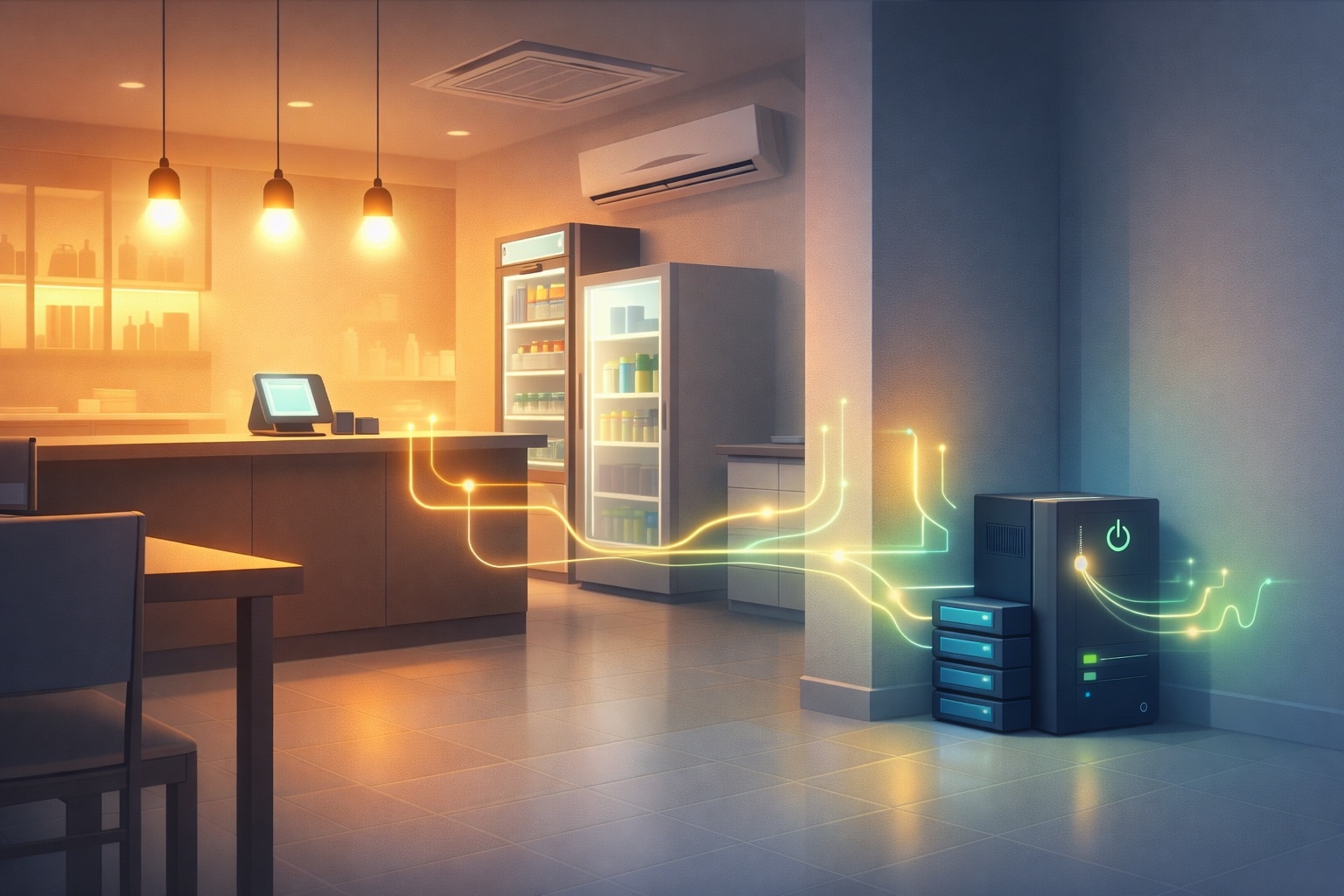
For most small to medium restaurants in Nigeria, a 2.4kVA to 5kVA Pure Sine Wave Solar Hybrid Inverter is the standard requirement. It handles the high startup surges of deep freezers and fridges while keeping POS systems and lighting operational during grid outages. The Mercury 2.4kVA Solar Hybrid Bundle (₦1,146,000 with 2×200Ah batteries) is the sweet spot for most fast food outlets and bukkas, delivering 8 to 13 hours of backup for freezers, fans, lighting, and POS systems.
WHY RESTAURANTS IN NIGERIA NEED A DEDICATED INVERTER SYSTEM
Running a restaurant in Nigeria means battling two enemies every single day: food spoilage and fuel costs. Relying solely on a generator to keep your drinks cold and your proteins frozen eats directly into your profit margins. With petrol prices at approximately ₦850 per litre and diesel at ₦880 per litre (February 2026), the operational cost of running a generator for 8 to 12 hours a day is unsustainable.
A Mercury Solar Hybrid Inverter system offers a silent, automatic transition during power cuts, ensuring your customers never notice the changeover. Whether you run a quick-service restaurant (QSR), a bukka, or a fine dining establishment, choosing the right inverter for restaurant Nigeria operations is critical to protecting your equipment and your bottom line.
THE “FREEZER SURGE” TRAP: WHAT EVERY RESTAURANT OWNER MUST KNOW
In a restaurant setting, cooling is your biggest energy challenge. Standard “non-inverter” deep freezers use compressors that demand a massive startup surge, often 5 to 6 times their running wattage (Locked Rotor Amperage). If you connect two standard freezers to a small inverter, this combined surge can trip the system instantly.
The Smart Fix: We strongly recommend switching to Inverter Freezers. Unlike standard models, Inverter Freezers use variable-speed compressors that “soft start,” eliminating the surge problem. This allows you to power more cooling appliances on a smaller, more affordable Mercury inverter and battery bank. For a deeper breakdown of how different fridges and freezers interact with inverter systems, see our guide on whether an inverter can carry a fridge.
TECHNICAL DEEP DIVE: POWERING COMMERCIAL KITCHENS
Designing an energy system for a restaurant is significantly more complex than a home setup due to the nature of commercial appliances. The load profile is dominated by inductive loads (motors in fridges, blenders, fans) rather than resistive loads (lighting). Understanding this is essential before choosing an inverter for restaurant Nigeria operations.
Handling Inductive Startup Currents: The primary technical hurdle is the startup current of refrigeration units. A commercial deep freezer rated at 200W might pull 1,200W for a split second when the compressor kicks in. A Mercury Pure Sine Wave inverter is non-negotiable here. Its toroidal transformer design provides the robust surge capability needed to handle these spikes without collapsing the voltage, protecting the motor windings of your expensive appliances.
Duty Cycle and Heat Dissipation: Restaurant inverters operate under a high duty cycle, often running for 8 to 12 hours continuously. Unlike residential backups used only for evenings, a restaurant unit must manage heat dissipation effectively. Mercury inverters feature intelligent cooling systems that ramp up fan speed based on load percentage and internal temperature, ensuring stability even in hot Nigerian kitchens.
The Role of MPPT in Commercial Use: Since restaurants operate primarily during daylight hours, solar integration is vital. The Maximum Power Point Tracking (MPPT) charge controllers built into Mercury Hybrid Inverters allow you to run your loads directly from the sun while simultaneously charging the batteries. This “load shifting” means you minimise battery cycles during the day, extending the lifespan of your energy storage. Learn more about choosing the right solar panels for your restaurant system.
CRITICAL CONSIDERATIONS BEFORE BUYING
Before purchasing an inverter for restaurant Nigeria use, it is crucial to understand the limitations and requirements of a battery-based system compared to a generator.
- Heating Elements are Forbidden: You cannot run electric cookers, industrial ovens, or electric deep fryers on a standard inverter setup. These resistive loads consume too much power and will drain batteries in minutes. Stick to gas for cooking.
- Freezer Management: Do not start all freezers simultaneously. If using standard freezers, stagger their startup times to avoid a cumulative surge that trips the inverter. Read more about why inverters beep and trip to understand overload protection.
- Battery Chemistry Matters: For high-traffic restaurants, Lithium Iron Phosphate (LiFePO4) batteries are superior to Tubular or Gel. They charge faster (2 to 3 hours vs 8 hours) and last 3x longer, which is vital if you have multiple outages per day. See our guide on which battery is best for an inverter.
- Separation of Circuits: Your electrician must separate the “Inverter DB” (lights, fans, freezers, POS, sound) from the “Heavy DB” (ACs, pumps, ovens) unless you are sizing for a large 5kVA+ system. For wiring guidance, see our inverter installation guide.
RECOMMENDED INVERTER SOLUTIONS FOR RESTAURANTS
Based on the typical power requirements of Nigerian eateries, we have curated three tiers of solutions. These systems prioritise cooling retention and point-of-sale uptime. Here’s how to match your restaurant to the right Mercury system:
| Restaurant Size | Recommended System | Price |
|---|---|---|
| Small (Kiosk / Shawarma / Juice Bar) 1× Inverter Freezer, 2× Fans, LED Lighting, POS, Blender | Mercury 1.5kVA Solar Hybrid + 1×200Ah battery | ₦750,000 |
| Medium (Fast Food / Bukka) 2× Deep Freezers, 1× Fridge, 4× Fans, TV, Sound, POS, Lighting | Mercury 2.4kVA Solar Hybrid Bundle + 2×200Ah batteries | ₦1,146,000 |
| Large (Restaurant / Lounge / Café with AC) 3–4 Freezers/Fridges, 1HP Inverter AC, Coffee Machine, Full Sound | Mercury 5kVA + 10kWh Lithium + 16×450W Solar | ₦5,538,000 |
The 2.4kVA system is the sweet spot for most Nigerian restaurants. It runs on a 24V DC platform with 2×200Ah batteries, giving you robust backup for all your cooling and customer-facing equipment. Highly recommended to add solar panels to reduce daytime grid dependence. For a detailed breakdown of what each size can power, check our 1.5kVA load guide, 2.4kVA load guide, or the 5.5kVA load guide.
COST ANALYSIS: PETROL GENERATOR VS. MERCURY INVERTER
Many restaurant owners hesitate at the upfront cost of an inverter, but the maths proves it is a necessary investment. Let’s analyse the cost of running a petrol generator for 8 hours a day versus a Mercury Solar Hybrid system.
| Cost Item | Petrol Generator | Mercury 2.4kVA Hybrid |
|---|---|---|
| Upfront cost | ~₦250,000 | ₦1,146,000 (complete system) |
| Fuel consumption | ~1.2 litres/hour | 0 (solar) or grid charging |
| Daily cost (8 hrs) | ₦8,160 (petrol at ~₦850/L) | ~₦675 (grid charging) |
| Monthly fuel/energy | ₦244,800 | ₦20,250 |
| Monthly maintenance | ₦25,000 (oil, filters, servicing) | ₦0 |
| Annual operating cost | ₦3,237,600 | ₦243,000 |
| Noise level | 75–85 dB (annoys customers) | Silent |
| Fumes near food? | Yes — health risk | None |
Annual savings: approximately ₦2,994,600. The Mercury 2.4kVA system pays for itself in roughly 5 months of saved fuel costs. After that, the ₦245,000+ you were burning on petrol every month becomes pure profit. Adding solar panels pushes your daily energy cost even closer to zero.
BATTERY SIZING FOR RESTAURANT BACKUP
Your freezers and fridges don’t take breaks, and neither should your inverter for restaurant Nigeria backup. Here’s how to calculate the right battery bank for your restaurant. The formula is straightforward:
Backup Hours = (Battery Voltage × Ah × DoD × Inverter Efficiency) ÷ Load Watts
For the Mercury 2.4kVA system with 2×200Ah batteries on a 24V bank:
Usable energy = 24V × 200Ah × 0.8 (DoD) × 0.85 (efficiency) = 3,264Wh
We use 80% Depth of Discharge here because Nigerian power conditions mean long outages and deep cycling is the norm, not the exception. This reduces overall battery lifespan compared to the textbook 50% DoD, but it reflects how restaurants actually use their systems in practice.
At a typical restaurant load of 400W (2 freezers cycling, fans, lighting, POS):
3,264Wh ÷ 400W = approximately 8 hours of pure battery backup.
At a lighter load of 250W (freezers already cold, minimal lighting):
3,264Wh ÷ 250W = approximately 13 hours.
That covers most daytime outages comfortably. For restaurants in areas with extended outages, you can add more batteries or upgrade to the 5kVA Lithium system for 10kWh of storage. Use Mercury Direct’s battery backup time calculator to plug in your exact restaurant load and get a precise runtime estimate.
Pro tip: Running at 80% DoD is standard practice in Nigeria, but it does reduce GEL battery lifespan to roughly 500 to 800 cycles (about 2 to 3 years of daily use). If your restaurant cycles batteries heavily every day, the LiFePO4 lithium option handles 2,000+ cycles at 95% DoD, making it the better long-term investment. Either way, adding solar panels extends battery life by reducing the depth of each daily cycle. Learn more about how to extend your battery lifespan by up to 50%.
WHY RESTAURANTS CHOOSE MERCURY DIRECT
We don’t just sell boxes. We engineer power solutions for businesses. Buying directly from Mercury Nigeria ensures you are protected against counterfeits and supported by technical experts who understand restaurant power needs.
- Local Warranty Support: Quick turnaround on repairs or replacements at our Lagos service centre. We understand that downtime means lost food and revenue.
- Expert Sizing: We help you calculate your load to prevent buying an undersized system that trips constantly. Not sure where to start? Use our Inverter Buying Guide Nigeria 2025.
- Solar Integration: All our recommended hybrid inverters are solar-ready, allowing you to expand your system to run essentially for free during the day.
- Nationwide Delivery: Same-day delivery in Lagos, 48 hours across Nigeria.
Inverter for Restaurant Nigeria FAQ
Can I run my industrial oven on a 5kVA inverter?
No. Industrial ovens and electric cookers are resistive heating loads that consume massive amounts of power (often 3,000W+ continuously). Running them on batteries is inefficient and will drain your bank in minutes. Use gas for cooking and reserve the inverter for refrigeration, lighting, fans, and POS systems.
How long will my deep freezers stay cold on battery?
This depends on the battery bank size and the freezer’s efficiency. With a 2.4kVA system and 2×200Ah batteries, running 2 efficient freezers alongside fans and lighting, you can expect 5 to 8 hours of runtime if the freezers are already cold before the power cuts. Adding solar panels extends this significantly during the day.
Why do you recommend Inverter Freezers?
Inverter Freezers do not have the high “startup surge” of standard freezers. This allows you to use a smaller inverter capacity to run them, saving you hundreds of thousands of Naira on the inverter setup. The soft-start compressor also draws less power overall, which means longer battery runtime and lower electricity bills.
Is a Solar Hybrid Inverter better than a regular inverter?
Yes, absolutely. A Solar Hybrid Inverter has a built-in solar charge controller (MPPT in Mercury’s range). Even if you don’t buy panels immediately, having the capability means you can add them later to generate your own free electricity during peak restaurant hours, reducing your NERC bills and generator usage even further.
What size inverter does a fast food restaurant need?
For a standard fast food outlet running 2 freezers, a fridge, fans, lighting, TV, and POS, the Mercury 2.4kVA system is the recommended starting point. If you also need to run an AC unit, step up to the 5kVA system. Use our battery backup time calculator to get your exact runtime.
Can I add solar panels to my restaurant inverter later?
Yes, that’s the advantage of a solar hybrid inverter. Mercury’s hybrid range has a built-in MPPT charge controller that accepts solar panel input from day one. You can start with just the inverter and batteries, then add panels as your budget allows. Adding panels reduces your grid charging costs to near zero and extends battery lifespan by reducing daily discharge depth. See our guide on how to connect a solar panel to a battery.
Stop Burning Your Profits on Petrol
The Mercury 2.4kVA Solar Hybrid Bundle (₦1,146,000) is the recommended entry point for most Nigerian restaurants. It ships same-day in Lagos with free installation and a 12-month warranty. For deliveries outside Lagos, Mercury Direct dispatches certified installation partners nationwide. Call 07037451701 or WhatsApp us for a free restaurant power audit. Have more questions? Check our Inverter FAQ.
Get Mercury 2.4kVA for Your Restaurant →