
48V Lithium vs 4 Tubular Batteries: Which Is Right for Your Inverter?
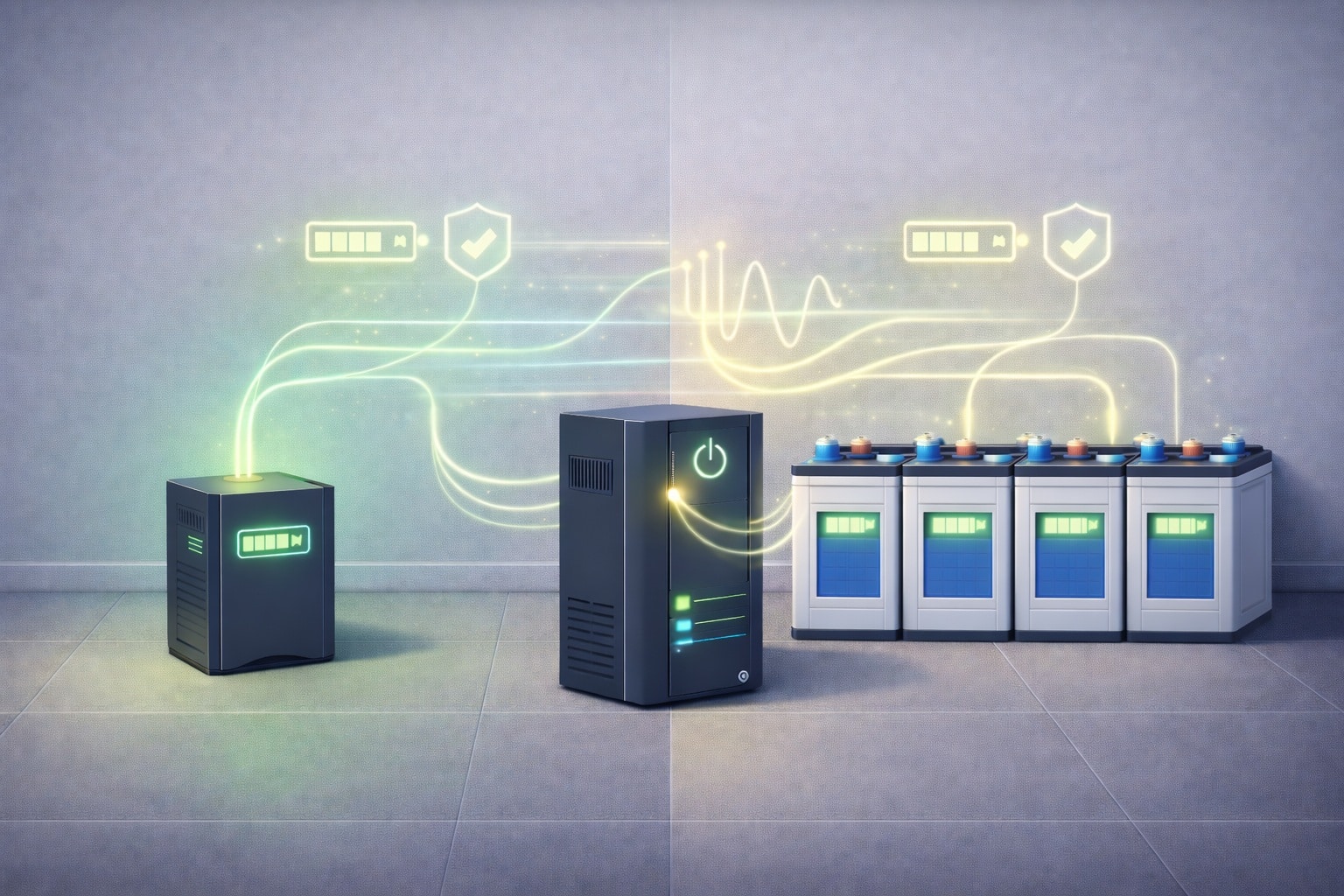
Lithium wins on almost every metric except upfront price. A 48V lithium battery typically lasts 10 years, charges in about 2 to 4 hours, needs no routine maintenance, and gives you more usable energy in a smaller, cleaner package. Four tubular batteries usually last around 2 to 5 years, need a water top-up every 9 to 12 months, charge more slowly at about 6 to 10 hours, and take up more space. If your budget allows it, lithium is the smarter long-term investment. If upfront cost matters most, tubular batteries are still a proven and reliable option, but you should plan for replacement every 2 to 5 years.
For 48V inverter systems, typically the Mercury 5.5kVA and above, you have two main battery options: a single 48V lithium (LiFePO4) unit, or four 12V tubular batteries wired in series. Both create a 48V bank. Both work. But the differences in how they perform, how long they last, and what they cost over time are significant enough to deserve a proper comparison before you spend your money.
This guide covers every angle: performance, lifespan, maintenance, safety, cost of ownership, and the one capacity mistake that catches many buyers out when switching from tubular to lithium. For background on which inverter these batteries pair with, read our inverter buying guide for Nigeria and our guide on which battery type is best for an inverter.
Understanding the Two Options
48V Lithium (LiFePO4) Battery
A 48V lithium battery is a single compact unit operating at 48 volts nominal. It contains an integrated Battery Management System (BMS) that automatically monitors and protects the cells from overcharging, over-discharging, and overheating. The LiFePO4 chemistry is the safest lithium variant available. It does not emit gas, does not require ventilation, and has an extremely low fire risk.
| Specification | 48V Lithium (LiFePO4) |
|---|---|
| Voltage | 48V nominal |
| Capacity options | 100Ah, 150Ah, 200Ah (5kWh to 10kWh+) |
| Weight | 75 to 120kg for 200Ah; scales with capacity |
| Lifespan | 10 years |
| Maintenance | None required |
| BMS | Built-in |
| Gas emission | None |
4 Tubular Batteries in Series
Four 12V tubular lead-acid batteries wired in series (positive to negative) create a 48V battery bank. The tubular plate design gives better performance and longer life than standard flat-plate batteries, making them the preferred lead-acid option for inverter systems. They require regular distilled water topping and should be kept in a well-ventilated area.
| Specification | 4 x 12V Tubular Batteries |
|---|---|
| Voltage | 48V nominal (4 x 12V in series) |
| Capacity (common) | 200Ah or 220Ah per battery (9.6kWh to 10.6kWh total) |
| Weight | 250 to 400kg total (60 to 100kg each) |
| Lifespan | 2 to 5 years |
| Maintenance | Water top-up every 9 to 12 months, quarterly terminal cleaning |
| BMS | None |
| Gas emission | Hydrogen gas during charging |
Performance Comparison
Depth of Discharge: The Hidden Capacity Difference
The most important number is not what the battery label says. It is how much of that capacity you can actually use without damaging the battery. This is called Depth of Discharge (DoD).
| Battery Type | Recommended DoD | Usable Ah (bank total) | Usable Energy |
|---|---|---|---|
| 48V Lithium 200Ah | 80 to 90% | 160 to 180Ah | 7.7 to 8.6kWh |
| 4 x Tubular 200Ah (series bank) | 80% (Nigerian reality) | 160Ah | 7.7kWh |
In Nigeria, where grid power can vanish for 12 to 18 hours at a stretch and batteries get cycled hard every day, most tubular battery users discharge to 80 percent DoD in practice — not the conservative 50 percent figure often quoted. At 80 percent DoD, four 200Ah tubular batteries and a 48V 200Ah lithium deliver the same usable energy on paper: 160Ah or 7.7kWh. The real lithium advantage is that it can safely go to 90 percent DoD (8.6kWh) without accelerating wear, it maintains that capacity for 10 years, and it tolerates daily deep cycling without the lifespan penalty that kills tubular batteries within 2 to 5 years of heavy use. If your home draws 800W during an outage, a 48V 200Ah lithium at 90 percent DoD gives roughly 10.8 hours of backup. Four 200Ah tubular at 80 percent DoD gives roughly 9.6 hours. Use the Mercury battery runtime calculator to run your own numbers.
Charging Speed
In Nigeria, where NEPA power can return for only a few hours at a stretch, how fast your batteries recharge matters enormously.
| Battery Type | Full Charge Time | Charge Rate |
|---|---|---|
| 48V Lithium | 2 to 4 hours | 0.5C to 1C |
| 4 x Tubular | 6 to 10+ hours | 0.1C to 0.2C |
Lithium batteries accept higher charge currents without damage. If NEPA returns for 4 hours, a lithium bank will be fully charged and ready. A tubular bank will reach only 40 to 60 percent charge in the same window, leaving you short for the next outage.
Energy Efficiency
Battery efficiency determines how much of the power used to charge actually gets stored, and how much is lost as heat. This has a direct effect on your electricity bill.
| Battery Type | Round-Trip Efficiency | Energy Loss |
|---|---|---|
| 48V Lithium | 90 to 95% | 5 to 10% |
| 4 x Tubular | 70 to 80% | 20 to 30% |
For every ₦1,000 spent charging, lithium stores ₦900 to ₦950 worth of usable energy. Tubular stores ₦700 to ₦800. Over a year of daily cycling, that gap compounds into a meaningful electricity saving.
Voltage Stability
Lithium batteries maintain a steady voltage from full charge to nearly empty. Tubular batteries drop voltage progressively as they discharge, from around 52V when full to around 42V as they discharge. That voltage sag is what causes lights to dim, fans to slow down, and sensitive electronics to behave erratically in the final hours of a tubular bank’s discharge cycle. Lithium eliminates this entirely.
Lifespan and Maintenance
| Factor | 48V Lithium | 4 x Tubular |
|---|---|---|
| Cycle life (at rated DoD) | 3,000 to 6,000 cycles | 800 to 1,500 cycles |
| Years of service (daily use) | 10 years | 2 to 5 years |
| Replacements over 12 years | 0 | 2 to 3 |
| Water topping | Never | Every 9 to 12 months (distilled water) |
| Terminal cleaning | Annual check | Quarterly |
| Ventilation required | No | Yes |
| BMS protection | Built-in | None |
| Annual maintenance cost | ₦0 to ₦5,000 | ₦20,000 to ₦50,000 |
Tubular batteries require a well-ventilated installation space. Lithium (LiFePO4) has no such requirement and can go in a closet, under stairs, or in any enclosed cabinet. For guidance on installation, read our complete guide on connecting an inverter to a battery. For maintenance best practices on whichever battery type you choose, read our guide on how to extend inverter battery lifespan by up to 50 percent.
Total Cost of Ownership Over 12 Years
Upfront price is only part of the story. The real question is what each option costs over the full life of a lithium battery — 12 years.
| Cost Component | 48V Lithium (200Ah) | 4 Tubular (200Ah each) |
|---|---|---|
| Initial purchase | ₦2,064,000 | ₦600,000 |
| Replacement at Year 4 | ₦0 | ₦600,000 |
| Replacement at Year 8 | ₦0 | ₦600,000 |
| Maintenance over 12 years | ₦60,000 | ₦360,000 |
| Charging losses (electricity) | Minimal | ₦240,000 |
| Installation (3 replacements for tubular) | ₦50,000 | ₦150,000 |
| Total 12-year cost | ₦2,174,000 | ₦2,550,000 |
The saving over 12 years is approximately ₦376,000 in favour of lithium. The higher upfront cost (₦1,464,000 more than a tubular set) is recovered after the first tubular replacement at Year 4. From Year 4 onwards, lithium is the cheaper option — and it keeps running for another 6 to 8 years without further cost.
The Capacity Warning: Don’t Downgrade When Switching to Lithium
This is the single most common mistake when upgrading from tubular to lithium. Many buyers see “100Ah” on a lithium battery and assume it replaces four 220Ah tubular batteries. It does not. It is actually a downgrade.
| Battery Configuration | Total Capacity | Usable Capacity (at safe DoD) |
|---|---|---|
| 4 x 220Ah Tubular | 10.6kWh | 8.5kWh at 80% DoD (Nigerian typical) |
| 48V 100Ah Lithium | 5.1kWh | 4.1kWh at 80% DoD |
| 48V 150Ah Lithium | 7.7kWh | 6.2kWh at 80% DoD (still short for daily use) |
| 48V 200Ah Lithium | 10.2kWh | 8.2kWh at 80% DoD |
For Nigerian homes cycling their batteries daily, the minimum correct replacement for four 220Ah tubular batteries is a 48V 200Ah lithium. It delivers 8.2kWh usable at 80 percent DoD — roughly equivalent to your old tubular bank. For a real performance upgrade, go for a 48V 280Ah or higher. The Mercury 5kVA with 10kWh Lithium system is purpose-built for this exact upgrade.
Physical Size and Installation
| Specification | 48V Lithium (200Ah) | 4 x Tubular (200Ah each) |
|---|---|---|
| Total weight | 75 to 120kg | 250 to 400kg |
| Floor space | 0.125 m² | 0.56 m² |
| Ventilation needed | No | Yes |
| Installation | One person, wall-mountable | Multiple people, reinforced floor |
| Relocation | Easy | Very difficult |
For apartments, flats, and homes with limited space, lithium is a significant practical advantage. A tubular battery bank requires a sturdy dedicated rack, reinforced flooring in some cases, and proper ventilation. Lithium can go on a shelf, wall bracket, or inside a cabinet in a standard room.
When to Choose Each Option
Choose Lithium If:
- You use your inverter daily. High cycle count is where lithium’s 6,000-cycle lifespan pays back fastest.
- You have limited space. A single lithium unit takes a fraction of the floor space of four tubular batteries.
- You are adding solar. Lithium’s high efficiency and fast charge acceptance makes it the preferred battery for solar hybrid systems. See our guide on connecting solar panels to a battery bank.
- You want zero maintenance. No water topping, no terminal checks, no equalization charges.
- You are planning for 5 or more years. The 12-year total cost calculation strongly favours lithium at any meaningful usage level.
Choose Tubular If:
- Upfront budget is the binding constraint. Tubular batteries are a proven, reliable technology at a lower entry price.
- Outages are infrequent. If you rarely cycle the batteries, their lifespan degrades on calendar time rather than cycles, making the lower upfront cost more competitive.
- You have dedicated, well-ventilated battery space. A proper battery room removes the ventilation disadvantage entirely.
- This is a temporary installation. If you plan to upgrade or relocate within 2 to 3 years, tubular batteries make sense as a bridge solution.
Mercury Battery Products
Mercury Direct stocks both lithium and tubular batteries to suit different budgets and use cases. All batteries are genuine Mercury products sold with full warranty support from the Ikeja, Lagos service centre.
Mercury 48V Lithium (LiFePO4) Batteries
| Model | Total Capacity | Usable Energy | Price Range | Warranty |
|---|---|---|---|---|
| Mercury LiFePO4 48V 5kWh (~100Ah) | 5kWh | 4kWh | ₦1,200,000 | 5 years |
| Mercury LiFePO4 48V 10kWh (~200Ah) | 10kWh | 8kWh | ₦2,064,000 | 5 years |
| Mercury LiFePO4 48V 15kWh (~300Ah) | 15kWh | 12kWh | ₦2,520,000 | 5 years |
All Mercury lithium batteries include a built-in BMS with Bluetooth monitoring, 6,000+ cycle life rating, and a 5-year warranty. See the Mercury 5kVA with 10kWh Lithium complete system for a fully integrated option.
Mercury Tubular Deep-Cycle Batteries
| Model | Capacity | Price Range | Warranty |
|---|---|---|---|
| Mercury Deep Cycle Tubular 200Ah | 2.4kWh | ₦120,000 to ₦180,000 | 2 years |
| Mercury Deep Cycle Tubular 220Ah | 2.6kWh | ₦140,000 to ₦200,000 | 2 years |
Mercury tubular batteries use deep-cycle plate design rated for 1,200+ cycles. Four wired in series create the 48V bank required by the Mercury 5.5kVA Solar Hybrid and larger systems. For 24V systems like the Mercury 3.5kVA, use two 12V batteries in series instead.
48V Lithium vs Tubular Batteries: FAQ
Is a 48V lithium battery better than 4 tubular batteries?
For most Nigerian homes, yes. Lithium offers 80 to 90 percent usable capacity versus 50 percent for tubular, lasts 10 years versus 2 to 5, requires zero maintenance, and charges in 2 to 4 hours versus 6 to 10. The only advantage of tubular is lower upfront cost.
How many lithium batteries do I need to replace 4 tubular batteries?
For Nigerian homes cycling batteries daily, the minimum recommended replacement for four 220Ah tubular batteries is a 48V 200Ah lithium. Do not buy a 100Ah or 150Ah as a direct replacement. At 80 percent DoD a 100Ah provides only 4.1kWh usable and a 150Ah provides 6.2kWh — both fall short of the 8.5kWh from four 220Ah tubular batteries at 80 percent DoD.
Can I use 4 tubular batteries with a 48V inverter?
Yes. Connect four 12V tubular batteries in series, positive terminal to negative terminal, to create a 48V bank. This is a common and reliable setup. Read our guide on connecting an inverter to a battery for the wiring steps.
How long do 48V lithium batteries last in Nigeria?
A quality LiFePO4 battery lasts 10 years in typical Nigerian home use, delivering 3,000 to 6,000 charge and discharge cycles. Capacity degrades gradually to about 80 percent after 10 years of daily cycling.
Do lithium batteries need ventilation?
No. LiFePO4 lithium batteries can be installed in a standard room, closet, or enclosed cabinet without special ventilation. Tubular batteries require a well-ventilated area.
What size lithium battery do I need for a 3-bedroom home in Nigeria?
For Nigerian homes with daily outages, start at a minimum of 48V 200Ah (8.2kWh usable at 80 percent DoD). For heavy loads or full backup including an inverter AC, go 280Ah or higher. Call 07037451701 for a free sizing assessment tailored to your home.
What is the total cost of ownership for lithium vs tubular batteries over 12 years?
Over 12 years, a Mercury 10kWh lithium battery costs approximately ₦2,174,000 total. Four 200Ah tubular batteries cost approximately ₦2,550,000 including two replacements, maintenance, and installation — a saving of ₦376,000 with lithium. The bigger win is reliability: lithium runs the full 12 years with no swap. Tubular needs replacing every 4 years.
Warning: Not All Lithium Batteries Are Equal
The Nigerian market has seen a flood of cheap lithium batteries, particularly from unverified importers selling through social media and open markets. Many of these units are sold without a Battery Management System (BMS) or with a counterfeit BMS that provides no real protection. This is a serious risk.
A BMS is the brain of a lithium battery. Without it, the battery has no protection against overcharging, over-discharging, overheating, or short circuits. A lithium cell pushed past its limits does not simply fail quietly like a lead-acid battery. The consequences can be severe.
Before buying any lithium battery, verify the following:
- BMS is built-in and genuine. Ask the seller for the BMS specification. A legitimate battery will have documented cell balancing, overcharge protection, over-discharge cutoff, and thermal management.
- The brand has a local warranty. A seller who cannot provide a Nigerian warranty address or service contact is a red flag. If something goes wrong, you need local support.
- The chemistry is LiFePO4. Lithium Iron Phosphate is the safest lithium chemistry for home use. Other chemistries carry higher risk and are common in cheaper units.
- The capacity claims are realistic. One simple way to check is by looking at the weight. A real 48V 200Ah lithium battery will usually weigh between 75 and 120kg. If a battery says 48V 200Ah but weighs closer to 20 or 30kg, there is a good chance the capacity claim is exaggerated or not genuine.
- Buy from a verifiable dealer. Mercury Direct sells genuine Mercury LiFePO4 batteries with a 5-year warranty and full BMS documentation. Call 07037451701 before buying from any other source.
Not Sure Which Battery Is Right for You?
Call Mercury Direct on 07037451701 for a free battery assessment. Tell us your inverter model, how many hours of backup you need, and your budget, and we will size the right battery for your home. Or message us on WhatsApp and we will respond the same day.
WhatsApp Us for Free Advice →