
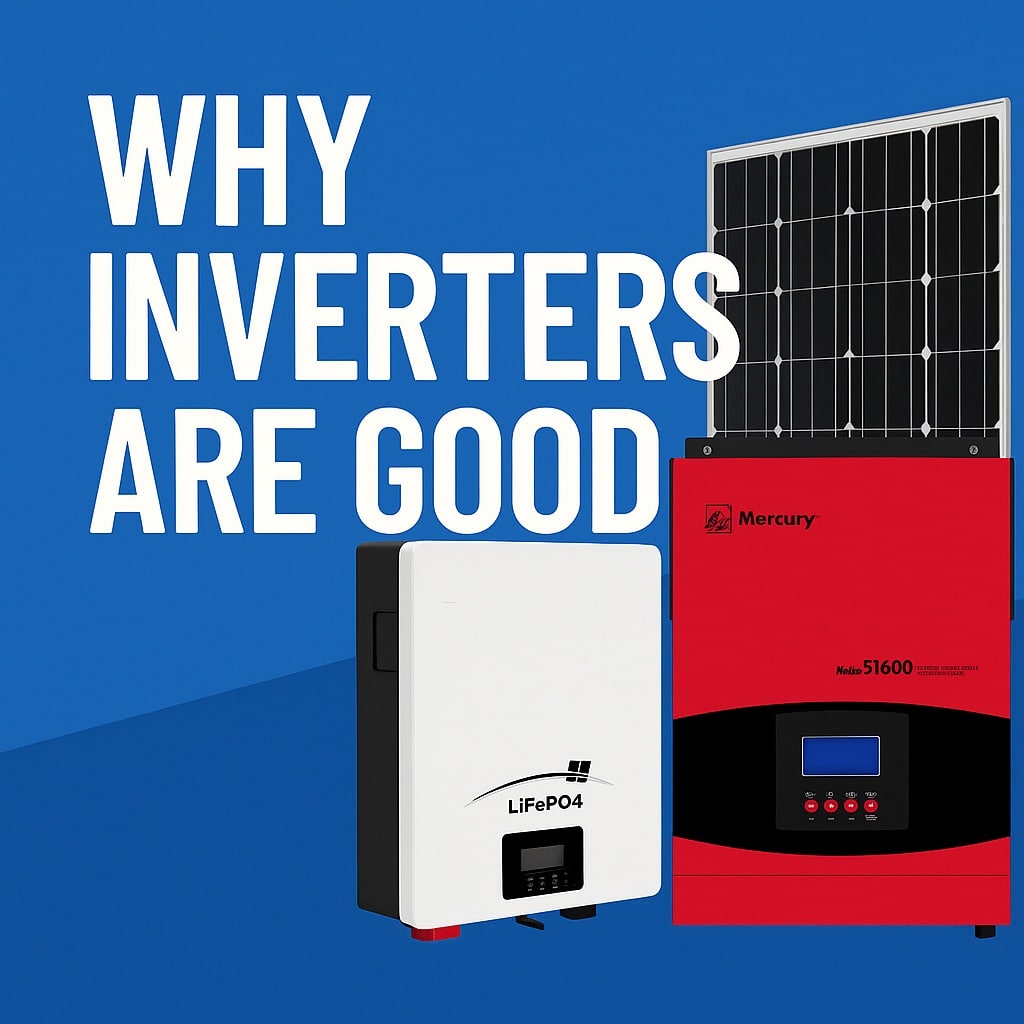
Why Inverters Are Good (And Gens Might Be Doing You Dirty)
Short Answer? Inverters keep your lights on when NEPA goes off by using stored battery power (with solar panels optional for charging). They run your appliances quietly, protect your devices from power surges, and remove the need for a generator in many homes. If NEPA outages stress you out, an inverter is your silent solution. Learn more about how inverters work and their importance in modern power systems.
Let's Talk Truth
Power in Nigeria? You already know the story. NEPA goes off, you wait. Sometimes, it doesn't come back for hours—or days. That's where generators come in, right? But how many times has your gen refused to start? Or drained your fuel overnight? Or annoyed your neighbours with constant noise and fumes?
The truth is, generators are old tech. Expensive, loud, high-maintenance, and not great for your health or wallet. If you've ever asked yourself, "There must be a better way?" — yes, there is. It's called an inverter. According to the World Health Organization, air pollution from fossil fuel combustion is a major health concern, making clean energy alternatives like inverters increasingly important.
What Exactly Is an Inverter?
An inverter is a device that powers your appliances using energy stored in batteries. Those batteries can be charged from the national grid (NEPA), a generator, or—ideally—solar panels. When NEPA takes light, the inverter automatically switches on to keep everything running. No fuel, no noise, no drama. It's like having a mini power station right in your home. The International Renewable Energy Agency (IRENA) highlights how renewable energy systems like solar-powered inverters contribute to energy security and environmental sustainability.
To learn more about how inverters work and their critical role in modern power solutions, check out our comprehensive guide on understanding inverters and their importance in power supply.
Inverter vs Generator: Quick Comparison
| Feature | Inverter | Generator |
|---|---|---|
| Noise Level | Silent | Very Loud |
| Fuel Required | No | Yes (Petrol/Diesel) |
| Automatic Switching | Yes | No (Manual Start) |
| Maintenance | Minimal | High (Oil, Spark Plug, etc.) |
| Air Pollution | None | Yes |
| Running Cost | Low | High |
Final Thoughts
So, why are inverters good? Because they offer more than backup—they offer freedom. Freedom from noise. From fuel. From stress. From NEPA. Whether you're a family tired of sleeping in heat or a business owner who needs uninterrupted operations, inverters just make sense.
Ready to make the switch? Our detailed inverter buying guide for Nigeria 2025 will help you choose the perfect system for your home or business needs.
Frequently Asked Questions (FAQ)
Do inverters work without solar panels?
Yes. Inverters can be charged using NEPA (grid power) or a generator. Solar panels are optional but recommended to reduce running costs and gain energy independence. The silent operation of inverters also helps reduce noise pollution, which the EPA identifies as a significant environmental and health concern.
Can I power my entire house with an inverter?
Yes, depending on the inverter size and battery capacity. Most homes use between 2kVA and 5kVA inverters for basic appliances. Larger systems can run air conditioners and fridges.
How long do inverter batteries last?
Battery lifespan depends on type and usage. GEL batteries can last 2–4 years, while Lithium batteries can last 5–10 years with proper care. The U.S. Department of Energy provides comprehensive information about energy storage technologies and their benefits for modern power systems.
Is an inverter better than a generator?
In most cases, yes. Inverters are silent, cleaner, safer for electronics, and cheaper to run in the long term. Generators are only preferred when extremely high loads or long outages are common.
How much does an inverter cost in Nigeria?
Basic inverter systems (with battery) start from ₦300,000. Prices increase with capacity, brand, and battery type. For detailed pricing and recommendations based on your specific needs, see our comprehensive inverter buying guide for Nigeria 2025. Contact Mercury Direct for a personalized quote.