
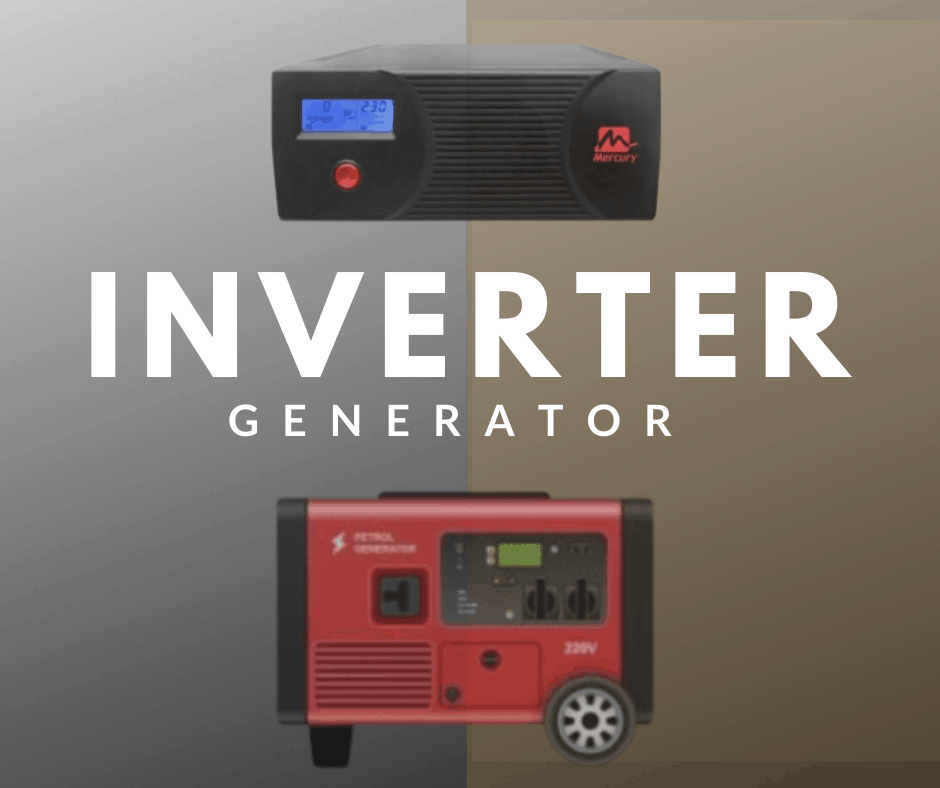
Inverter Or Generator: Which Is The Best Option?
The Power Backup Dilemma in Nigeria
Which is better, inverter or generator? This is a frequent question people face when thinking of investing in a power backup solution. Electricity is a focal necessity in our lives, without which we will cease to function. Whether it's our air conditioners, fans, television, kitchen appliances, literally everything in this day and age is run on electricity.
What happens when the electric supply in your area starts fluctuating or comes to a standstill, which is a frequent occurrence in Nigeria? You need an efficient backup source for electricity, and there are two primary choices: inverter or generator. Now both have the same purpose—to provide you with electric supply—however, both differ significantly in terms of cost and long term benefits.
Inverters are a Top Favorite in Nigeria
There is no doubt that Nigeria's power sector has not improved significantly, leading residents to rely heavily on alternate power sources. During the past few decades, generators have been the most common solution Nigerians turned to. Today, Nigeria is one of the largest generator markets in the world, with millions of units sold annually.
However, due to various compelling reasons, inverters are becoming increasingly popular among the general public in Nigeria. The shift represents a fundamental change in how Nigerians approach backup power solutions, moving from short term fixes to long term investments.
With so much to choose from, a common person may feel lost when searching for the best backup solution for their needs. Nowadays, inverters are a big hit in Nigeria, so without further ado, let's examine why inverters are better than generators in virtually every meaningful metric.
Difference Between Inverter And Generator
Before we can understand why Inverters have become so popular, and which is the best option for your needs—inverter or generator—we first have to examine how they are different in terms of function, operation, and overall value proposition.
How Generators Work
Generator: Today Nigeria is one of the largest markets in the world for generators. The best generators in Nigeria sell millions of units every year. Gensets are popular because they are relatively easy on the pocket initially, and there is no hassle while setting them up. However, they come with their fair share of significant disadvantages:
- They are incredibly noisy and cause substantial air pollution
- They run on expensive fuel, which regularly needs refilling, proving costly in the long run
- They require frequent maintenance and repairs
- They pose safety risks due to fuel storage and emissions
- They cannot operate indoors due to toxic fumes
How Inverters Work
Inverter: An inverter system converts stored DC power from batteries into AC power for your household appliances. Unlike generators that create electricity through combustion, inverters provide clean, stable power without any fuel requirements. They operate silently, require minimal maintenance, and can be installed indoors safely.
Now let us look at why inverters are a significantly better investment than generators across multiple dimensions.
How Much Will Generators Cost You In the Long Run?
Even though the Inverter Price in Nigeria is higher than that of a generator initially, there are substantial additional costs associated with generators that you should keep in mind when making your decision.
Annual Generator Operating Costs
The fuel required to run your generator: Estimating a conservative cost at [1] N1000 per liter (current rates), many houses in Lagos end up spending around [2] N150,000 every month solely on fuel for their generator. This adds up to a staggering N1,800,000 per year just for fuel costs.
Maintenance and repair costs: If you are unable to maintain your generator yourself, a technician will have to make regular maintenance visits. These maintenance costs can add up to N15,000 to N150,000 per annum, depending on the generator size and usage frequency.
Generator or Inverter: Why Inverters are a Better Investment?
Let's examine the comprehensive reasons why inverters represent a superior investment compared to generators, analyzing each factor that affects your long term satisfaction and financial well-being.
1. Difference In Cost
When you compare the total cost of investing and running a generator of any size in the long run with the cost of an equal-sized inverter, the owners can save up [3] 35-50% annually. This represents substantial savings that compound over time.
| Cost Factor | 1.5kVA Generator (Annual) | 2.4kVA Inverter System (Annual) | Savings |
|---|---|---|---|
| Initial Purchase | N250,000 | N1,146,000 | -N896,000 |
| Fuel Costs | N1,800,000 | N0 | N1,800,000 |
| Maintenance | N100,000 | N20,000 | N80,000 |
| Total Annual Cost | N2,150,000 | N1,166,000 | N984,000 |
For instance, the buying and running cost of a 1.5kVA fuel generator can exceed ₦2,150,000 in just one year due to fuel and maintenance expenses. In contrast, a 2.4kVA Complete Inverter System costs around ₦1,166,000 upfront, with little to no running costs apart from occasional maintenance (₦20,000 or less yearly) and a battery replacement every 4–10 years depending on the battery type. That means you could save up to 45% or more in your first year alone, with even greater savings over time.
2. Inverters Require Less Maintenance
The best part about investing in an inverter is that it doesn't need expensive or regular maintenance. Inverter systems are designed for reliability and longevity, with most maintenance involving simple battery care and occasional cleaning.
On the other hand, generators need routine maintenance so that they can operate effectively. Moreover, their oil needs changing after every 200 hours of operation, air filters require regular cleaning or replacement, and spark plugs need periodic replacement. The maintenance schedule for generators is intensive and costly.
3. Inverters are Silent
While the majority of generators are loud and deafening, producing noise levels of 70-90 decibels, Inverters operate in complete silence. You won't disturb your neighbors while using an Inverter, and you can leave it on all night while you sleep in peace.
This silent operation is particularly valuable in residential areas where noise pollution is a concern. Many communities and housing estates have restrictions on generator usage during certain hours, but inverters face no such limitations.
4. Inverters are Environment Friendly
Inverters are a better option than generators owing to their environmental benefits and sustainability. Generators require you to buy and store diesel or petrol, and you need to be extra cautious as these fuels are extremely flammable and pose safety risks.
Inverters are completely free from fuel usage. Moreover, generators contribute significantly to air pollution as they emit toxic fumes including carbon monoxide, nitrogen oxides, and particulate matter. These emissions contribute to air quality degradation and health problems. This is why inverters are environmentally friendly and represent a sustainable power solution.
5. The Difference In Size And Portability
There is a stark difference in the size and footprint of inverters and generators. Inverters are compact, lightweight, and easily portable. Most inverter units can be carried by a single person and installed in small spaces without difficulty.
On the other hand, generators are heavy and bulky. Moving them requires multiple people, and they need dedicated outdoor space for safe operation. Generators also require proper ventilation and cannot be operated in enclosed spaces due to toxic emissions.
6. Inverters Change Over Automatically
Inverters switch over automatically in case there is a power outage. They work on the same principle as a UPS (Uninterruptible Power Supply), and as long as the Inverter Battery is charged, it will automatically take over power supply within milliseconds.
On the other hand, a generator must be turned on manually in case of a power outage. This means you need to be present to start the generator, and there's always a delay in power restoration. During this delay, sensitive electronic equipment may be affected, and you lose the convenience of seamless power transition.
Comprehensive Cost Analysis: 5-Year Comparison
To provide a complete picture of the financial implications, let's examine a detailed 5-year cost analysis comparing generators and inverters:
| Year | Generator Costs | Inverter Costs | Annual Savings | Cumulative Savings |
|---|---|---|---|---|
| Year 1 | N2,150,000 | N1,166,000 | N984,000 | N984,000 |
| Year 2 | N1,800,000 | N20,000 | N1,780,000 | N2,764,000 |
| Year 3 | N1,800,000 | N20,000 | N1,780,000 | N4,544,000 |
| Year 4 | N2,000,000 | N120,000 | N1,880,000 | N6,424,000 |
| Year 5 | N1,800,000 | N20,000 | N1,780,000 | N8,204,000 |
Over five years, choosing an inverter over a generator can save you nearly N5 million naira, demonstrating the compelling financial advantage of inverter systems.
Additional Benefits of Inverter Systems
Power Quality and Equipment Protection
Inverters provide clean, stable power that protects sensitive electronic equipment. The power output from quality inverters is often cleaner than grid electricity, with stable voltage and frequency. This protection extends the lifespan of your appliances and prevents damage from power fluctuations.
Indoor Installation Capability
Unlike generators that must be operated outdoors due to toxic emissions, inverters can be safely installed indoors. This provides security benefits, weather protection, and eliminates the need for dedicated outdoor generator housing.
Scalability and Expandability
Inverter systems can be easily expanded by adding more batteries for longer backup time or upgrading to higher capacity inverters. This scalability allows you to grow your power system as your needs change.
Choosing the Right Inverter System
Frequently Asked Questions
A: Inverters provide superior long term value despite higher upfront costs. The savings in fuel, maintenance, and operational costs make inverters the clear winner for most applications.
A: Quality inverter batteries last 3-5 years with proper maintenance, while generators require maintenance every 200 hours of operation or monthly for regular users.
A: Yes, properly sized inverters can power all the same appliances as generators, often with better power quality and equipment protection.
A: Generators can run indefinitely with fuel supply, while inverters provide 4-12 hours of backup depending on battery capacity and load. However, automatic operation and silent running often make inverters more practical.
Final Thoughts
Are inverters or generators worth it? The answer is clearly in favor of inverters for most Nigerian households and businesses. Whether you are choosing between a generator or inverter, you should conduct thorough research on what fits your long term budget and lifestyle requirements.
Although generators cost less initially than inverters, they will have you paying substantially more in maintenance and fuel costs over time. With the ever-growing power outages in Nigeria, it is best to stick to an option with minimal costs in the long run while providing superior convenience, environmental benefits, and equipment protection.
The evidence overwhelmingly supports inverters as the superior choice for backup power in Nigeria. From the substantial cost savings to the environmental benefits, silent operation, and automatic changeover capability, inverters represent the future of residential and commercial backup power solutions.
Remember that the best battery for an inverter system depends on your specific requirements, budget, and maintenance preferences. Lithium batteries offer superior performance and longevity, while AGM and tubular batteries provide excellent value for budget-conscious consumers.
Need Expert Guidance?
Visit mercurydirect.com.ng or contact our team via WhatsApp at 07037451701 for personalized inverter system recommendations and professional installation services.
References
[1] Nigerian National Petroleum Corporation. "Current Fuel Pricing Structure." 2024.
[2] Lagos State Power Consumption Survey. "Residential Generator Usage Patterns." 2024.
[3] Spark Online Nigeria. "7 Reasons Why Inverters Are Better Than Generators." 2024.
But you still need regular electricity ot generator to charge up the inverter.
Yes, that is correct.
Not correct, you could just depend on solar panels
I think I will be pleased if you can give me your Enugu office location address to have one on one interaction to settle my mind on which type inverter to patronize. Thanks.
What of Solar panels?
How much is the inverter generator
Please, kindly click the link below
https://mercurydirect.com.ng/product/mercury-2-4kva-inverter-2x-200ah-deep-cycle-batteries-4x-300-watt-monocrystalline-solar-panels/
I will be very please if you can possibly give me the price quote for a set of 2.4 kva inverter and battery more over ,I want your direct contact in Nigeria and any of your agent within kogi state. And working with kogi state vigilante service Ankpa LG command, and solar /inverter backup installations technicians
We base in Lagos. Please, kindly contact 07037451701 for more details.
My take is a question and a comment.
Are inverters and battery forever?
My comment and advice is for people to go for Inverers only when they are sure that they are rich enough to compensate the periodic cost of replacing the batteries when the batteries had done over 60% to 70%:of its capability or rather its lifespan. When one remember that the average lifespan of most batteries may not be more than 3 years, then it is clear that the so called savings from the cost of not buying fuel to using the inverter battery instead of generator is very minimal and insignificant when one consider the stress and amount of money needed to buy inverter batteries every other year. In summary, the cost of buying batteries periodically is huge. The major advantages on this are the noiseless and the environmental benefits…..Honestly, such is not for the average person.
Are inverters and batteries forever?
The simple answer is no.
Hence my comment and advice is for people to go for Inverers only when they are sure that they are rich enough to afford it and capable of compensating for the periodic cost of replacing the batteries when the batteries had done over 60% to 70%:of its ability to retain power or rather its lifespan. When one remember that the average lifespan of most batteries may not be more than 3 years, then it is clear that the so called savings from the cost of not buying fuel to using the inverter battery instead of generator is very minimal and insignificant compared to stress and amount of money needed to buy inverter’s batteries every other year. In summary, the cost of buying batteries periodically is huge. The major advantages on this are the noiseless and the environmental benefits…..Honestly, such is not for the average person.