
How to Troubleshoot Inverter Not Switching to Battery Mode (2026)
Transfer failures in 2026 are typically caused by voltage window conflicts on Band A feeders or high battery impedance This guide explains how to calibrate your system for Nigeria’s current grid conditions and why the Mercury Solar Hybrid system provides the most reliable switchover logic.
Diagnosing Transfer Failures in the 2026 Power Sector
In the volatile landscape of the 2026 Nigerian power sector, a seamless transition from grid to backup is an operational necessity. You invest in a power backup system to eliminate downtime. Yet, a common failure point leaves homes and offices in darkness: the system detects a grid outage but fails to engage the backup reserves. Understanding how to troubleshoot inverter not switching to battery mode is critical for maintaining energy security.
This failure often stems from a misalignment between the inverter’s sensing logic and the erratic voltage profiles of Band A or Band B feeders. Whether due to compromised battery impedance, fused changeover relays, or incorrect input window settings, the result is the same: unannounced blackouts. This technical guide dissects the root causes of transfer failure and positions the Mercury 2.4kVA Solar Hybrid Inverter System as the calibrated solution for Nigeria’s grid.
Technical Mechanics of Transfer Failure
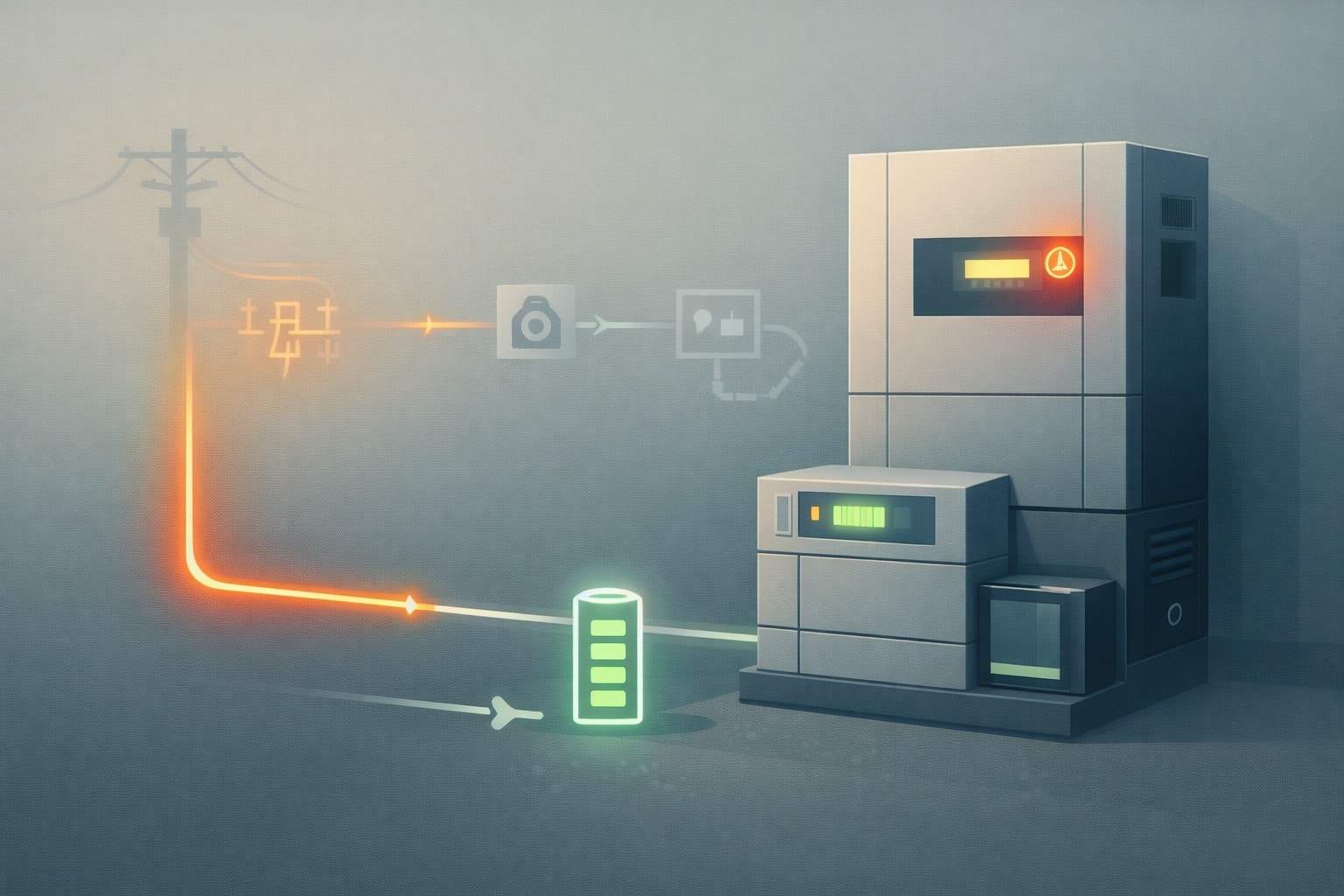
To diagnose why an inverter refuses to engage battery mode, one must first understand the “Handshake Protocol” between the AC Input and the DC Bus. In a healthy state, the Mercury 2.4kVA monitors the grid frequency (50Hz ±0.5) and voltage. When parameters drift, a Static Transfer Switch (STS) or electromechanical relay should isolate the grid and fire the mosfets within <10ms.
1. The Voltage Window Conflict
Nigerian grid voltages in 2026 often experience brownout conditions where voltage sags or surges. If your inverter is set to ‘Wide Mode’, it may cling to a dangerous grid connection rather than switching to battery, eventually tripping on overload or under-voltage protection without a clean transfer. If the transfer relay contacts are carbonized due to frequent arcing, they may physically stick in the “Grid” position, preventing the mechanical switch to battery.
2. Battery Impedance & Low-Voltage Cutoff (LVD)
A silent killer of transfer reliability is high internal resistance in aging batteries. The inverter may attempt to switch, but the moment the load is applied, the battery voltage collapses. The CPU interprets this as a dead bank and immediately shuts down to protect the hardware, appearing as though it never switched. The Mercury 2.4kVA Solar Hybrid mitigates this with an intelligent battery management system that pre-tests load capacity.
Mercury 2.4kVA Solar Hybrid Inverter System (2x 200Ah BUNDLE)
This 24V DC bundle resolves transfer failures with a specialized Zero-Cross Transfer Relay designed for high-inductive loads.
- Capacity: 2400VA / 1600W Real Power
- Battery Bank: 2x 200Ah Mercury Elite Deep Cycle
- Price: ₦1,427,000
ROI Analysis: Mercury 2.4kVA vs. Petrol Generators (2026)
With petrol prices at ₦815/litre in early 2026 and Band A tariffs at ₦209.5/kWh, the operational expenditure (OPEX) of a generator is no longer sustainable. This analysis compares costs based on NERC approved rates versus the Mercury 2.4kVA Hybrid Bundle.
| Metric | 3.5kVA Petrol Generator | Mercury 2.4kVA Solar Hybrid |
|---|---|---|
| Initial Capital | ₦450,000 | ₦1,427,000 |
| Monthly OPEX | ₦146,700 | ₦18,090 |
| Break-Even Point | N/A | 7.5 Months |
Frequently Asked Questions
Why does my inverter stay in bypass mode during a blackout?
This typically indicates a fused Changeover Relay or a faulty sensing circuit. If relay contacts weld together due to arcing, the unit cannot physically switch to the inverter circuit and requires professional service.
Can weak batteries prevent the inverter from switching?
Yes. If your battery bank voltage drops instantly under load due to high internal resistance, the inverter’s Low Voltage Disconnect will trigger immediately, making it appear as though the unit never switched.
What is the correct input voltage setting for Nigeria?
For sensitive electronics, use ‘UPS’ mode (180V-260V). For general lighting and robust appliances, ‘Wide’ mode (100V-280V) is acceptable but increases the risk of undervoltage pass-through before switching.