
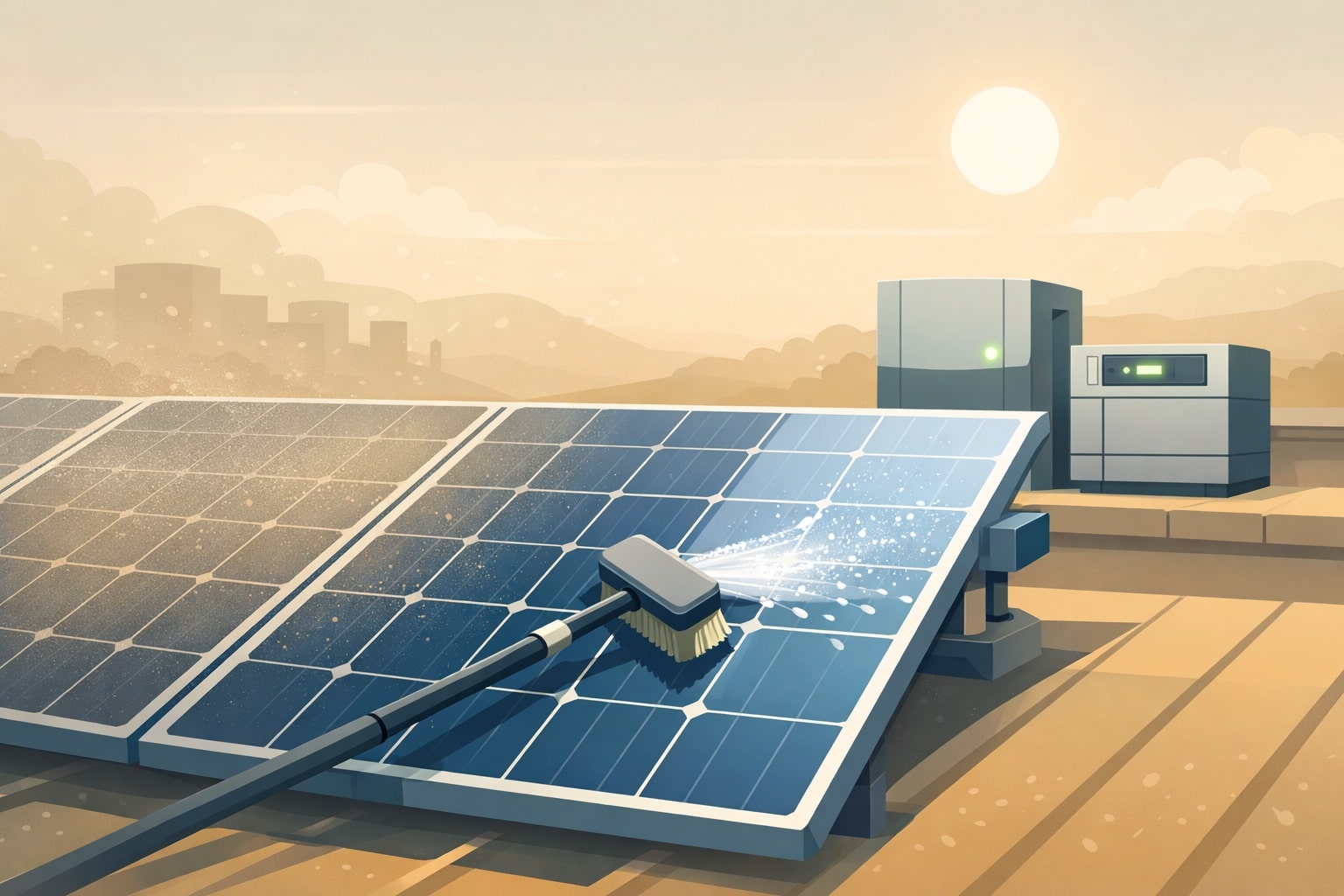
Expert Solar Cleaning Guide for Harmattan in Nigeria (2026)
Maximizing Solar Yield During the Haze
The annual Harmattan season presents a distinct challenge for renewable energy infrastructure across West Africa. As fine particulate matter from the Sahara settles on photovoltaic surfaces, energy generation can plummet by 25% to 40% if left unaddressed. The expert solar cleaning guide for harmattan in Nigeria (2026) is not merely a maintenance guide; it is a critical operational protocol for preserving the longevity and efficiency of your power backup systems.
For homeowners relying on precision equipment like the Mercury 2.4kVA Solar Hybrid Inverter System, dust accumulation acts as an unwanted insulator. It scatters sunlight before it hits the photovoltaic cells, forcing your system to work harder to charge batteries. This guide outlines the 2026 technical standards for safely restoring optimal output without damaging the anti-reflective coating on your panels.
The Physics of Soiling Losses in Photovoltaic Systems
In the context of Nigerian solar installations, ‘soiling loss’ refers to the reduction in energy output caused by the accumulation of dirt, dust, and pollen. During Harmattan, the ambient dust concentration increases significantly, depositing a fine layer of reddish-brown silt on solar arrays. This layer creates a shading effect that is uniform across the panel, linearizing the reduction in current (Amps) while voltage (Volts) remains relatively stable.
Technical analysis of 2026 solar performance data indicates that a dust thickness of just 4 grams per square meter can reduce solar irradiance reaching the cells by up to 30%. For a standard 2.4kVA system designed to harvest specific kilowatt-hours (kWh) per day, this loss translates directly to extended battery charging times. If the batteries do not reach full float charge during daylight hours due to restricted input, the system enters the evening with a compromised cycle life.
Thermal Hotspots and Hardware Risk
Uneven cleaning or partial shading from caked mud can lead to ‘hotspots.’ When one cell is blocked by debris, it acts as a resistor rather than a generator, consuming energy from the rest of the string and generating excess heat. Over time, this heat degrades the encapsulant and backsheet, permanently lowering the panel’s rated capacity.
System Specification and Maintenance Protocol
To mitigate the effects of Harmattan, we recommend a disciplined maintenance schedule paired with robust hardware. Below is the optimized configuration for residential stability and the correct procedure for maintenance.
Mercury 2.4kVA Solar Hybrid Inverter System (2x 200Ah BUNDLE)
System Capacity: 2400 Watts / 24V DC
Battery Bank: 4.8kWh Reserve (2x 200Ah Deep Cycle)
Solar Input: Optimizes up to 1500W PV Array
This system is the ‘Right-Size’ choice for Nigerian households requiring reliable backup for lighting, fans, televisions, and laptops. The 24V architecture offers a balance between efficiency and cost, minimizing the cabling losses seen in 12V systems while avoiding the complexity of 48V setups for moderate loads. Mercury integrates pure sine wave technology to ensure sensitive electronics remain safe from grid fluctuations.
Step-by-Step Cleaning Protocol (2026 Standard)
- Shut Down Procedure: Always switch off the PV isolator (DC breaker) before touching the panels. This prevents electrical shock hazards during the wet cleaning process.
- Timing is Critical: Clean strictly between 6:00 AM and 7:30 AM or after 6:00 PM. Applying cool water to hot panels during the afternoon sun causes thermal shock, which can crack the tempered glass.
- De-ionized Water Application: Use soft water or distilled water
. The mineral content in standard Nigerian tap water can leave calcium deposits (scaling) that block light as effectively as dust. - Soft Mechanical Action: Use a specialized solar cleaning brush or a microfiber mop. Avoid abrasive sponges or high-pressure washers, which can strip the anti-reflective coating and damage the silicone seals.
The Mercury Engineering Edge
Mercury Direct builds systems specifically for the rugged Nigerian environment. Our solar panels feature high-transmission tempered glass with advanced encapsulation that resists the abrasive nature of Harmattan dust better than generic alternatives.
Furthermore, the Mercury Solar Hybrid Inverters utilize advanced MPPT (Maximum Power Point Tracking) algorithms. Even when dust causes partial shading or reduced voltage, our MPPT controllers dynamically adjust the electrical operating point to extract the maximum possible power, mitigating the impact of environmental factors more effectively than older PWM technologies.
The Economics of Clean Panels
Neglecting maintenance during Harmattan has quantifiable financial implications. A dirty array on a Mercury 2.4kVA Solar Hybrid Inverter System may lose 2kWh of generation per day. Over a 30-day Harmattan peak, this totals 60kWh of lost energy.
According to current 2026 Nigerian Electricity Regulatory Commission (NERC) Band A tariffs, replacing that solar generation with grid power incurs significant costs. Furthermore, if grid power is unavailable and a petrol generator is used, the cost per kWh skyrockets. Regular cleaning ensures your ROI remains positive by maximizing the ‘free’ energy harvest and reducing generator runtime.
Expert Solar Cleaning Guide for Harmattan Frequently Asked Questions
How often should I clean my solar panels during Harmattan?
In peak Harmattan (December to February), we recommend a weekly cleaning schedule. The dust accumulation rate in Nigeria is high enough that waiting a month can result in a 35% efficiency drop.
Can I use detergents to clean the panels?
No. Standard household detergents can leave a film that attracts more dust or damages the panel’s coating. Use plain water or a specialized solar cleaning solution.
Is it safe to clean panels while the system is ON?
No. For safety, always turn off the DC isolator switch. Water conducts electricity, and damaged wiring could pose a risk if the system is active.